Health
An Unexpected Encounter with “Disability”
Shanghai has seen a lot of wind and rain lately, with unusually erratic temperatures. It often rains at night, and as the temperature drops sharply, the “dark wind and drifting rain slip into the cold window” without one noticing. So, quite unintentionally, the Professor had an unexpected experience of “disability.”
On this page
Shanghai has seen a lot of wind and rain lately, with unusually erratic temperatures. It often rains at night, and as the temperature drops sharply, the “dark wind and drifting rain slip into the cold window” without one noticing. So, quite unintentionally, the Professor had an unexpected experience of “disability.”
“Disability” Without the Slightest Warning
After finishing yesterday’s article update, it was already 3 a.m. before I knew it, and I was still feeling drowsy. So I washed up, sat on the sofa and finished a cigarette, drank the water left in my cup, and went to bed.
Before sleeping I felt a little stuffy, so I set the fan to the lowest natural-breeze setting, put it on a 1-hour timer, and sank into sleep.
At 7 a.m., I was awakened by the alarm on my phone and found that the blanket I had used the night before had already been thrown aside, while my body lay sprawled openly on the bed. From the moment I woke up, waves of swelling pain came from my lower back, and my body felt somewhat rigid. I wanted to get up and wash, but a current-like pain suddenly surged from the lumbosacral area, leaving me unable to move.
A thought flashed through my mind: “This is bad. This is bad!”
Sure enough, when I calmed down and carefully sensed the changes in different parts of my body, I was rather alarmed. At that moment I was still lying flat on the bed. The dull swelling pain in my lower back was still bearable, but I seemed unable to move; even the slightest attempt to turn over brought unbearable pain. Only my limbs, head, and neck could still move freely, and small movements there were not too agonizing.
So, I tried to get out of bed.
Something that had originally been a simple little thing now seemed unimaginably difficult to me.
Truly unimaginably difficult.
Because the slightest twist of the trunk caused extreme pain, the entire act of getting up depended on the coordination of my limbs, head, and neck. In particular, the coordination between my arms and lower limbs was both clumsy and demanding of precise control.
First, I raised my head, looked around, and figured out where my body was positioned. Next, using my hips as the center, I slowly used my hands and feet to rotate my body toward the edge of the bed. When my calves had reached the edge, I bent my knees and lowered them. By then I had already spent quite a bit of energy, and I would still accidentally trigger pain, so I needed to rest for a while.
Then I placed both arms at my sides, bent my left arm, and used my right hand to force my body slightly toward the left so I could apply strength more easily. Next I coordinated both arms, slowly pressed both hands into the mattress on either side of my body, and exerted force with my forearms and upper arms at the same time, moving from bent to straight and propping up my torso in the process. I tried the whole process 2–3 times and finally managed to sit up. During it, the pain again surged like a huge wave.
After resting briefly, I tried to stand. At this point, the sensations in my body and lower limbs were utterly different, almost like two separate worlds. If I relied only on my pelvis and lower limbs to stand, it still caused intense pain, and the lumbosacral pain would radiate into my chest and back, making it extremely hard to persist. With no other choice, I used both hands to brace the roots of my thighs, kept my entire torso perfectly straight, and then relied solely on my leg muscles to support my whole body from sitting to standing. Fortunately, I usually practice standing meditation, so the strength of my lower-limb muscles was enough to overcome these challenges.
Although I successfully stood up, it was actually very hard to hold. When upright, the pain in my body was especially obvious, and there was almost a faint tendency to fall over. At that moment I had to put both hands at my waist for support. Only then could I slowly move my steps toward the bathroom.
Roughly estimated, the whole process of getting out of bed took 5–7 minutes. You see, a trivial thing for an ordinary person can require extraordinary effort from a “disabled” person. Precisely because of this enormous contrast, ordinary people find it even harder to show empathy toward “disabled” people, because the difficulties “disabled” people face often far exceed ordinary people’s imagination.
If not for this unexpected experience, the Professor would also have found it hard to understand what the word “disability” truly means for an independent individual.
Pain Levels and Activity Limitations
To fully understand why even the small act of getting out of bed became such a challenge, we can first learn a little about pain levels, so that everyone can more intuitively feel the obstacles the Professor encountered in the process above.
1. Assessing Pain Severity
Clinically, many scales can be used to assess pain severity. For patients who can speak, self-assessment of pain is the gold standard, while external signs of pain, such as crying, facial muscle twitching, swaying, and rocking, are secondary. For patients who have difficulty communicating and for young children, behavioral and physiological nonverbal indicators may be the main source of information.
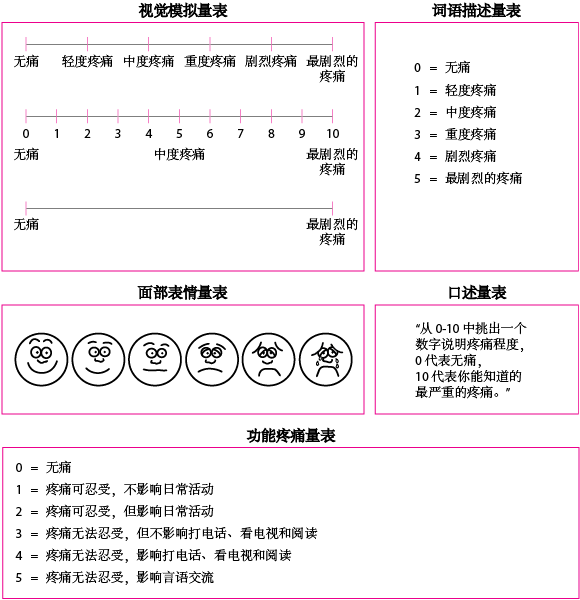
In this article, to make things easier to understand, we use the Numerical Rating Scales, NRS to evaluate pain severity during movement, so everyone can gain a clearer understanding of the activity limitations.
An NRS usually consists of a series of numbers, with verbal anchors representing the full possible range of pain intensity. Generally speaking, patients rate pain from 0 to 10, from 0 to 20, or from 0 to 100; 0 represents “no pain,” while 10, 20, or 100 represents the other extreme of the pain scale, such as “the worst pain imaginable,” “the worst pain,” or “maximum pain.” NRS requires patients to have an abstract understanding of scales, as well as a certain level of reading comprehension. Therefore, NRS is more suitable for patients aged 10 or above who have a certain level of education. In addition, some studies have found that NRS has relatively poor repeatability, so when conducting longitudinal follow-up trials, researchers should choose carefully when using NRS for pain assessment.
The Professor uses a 0-to-10 rating method in this article.
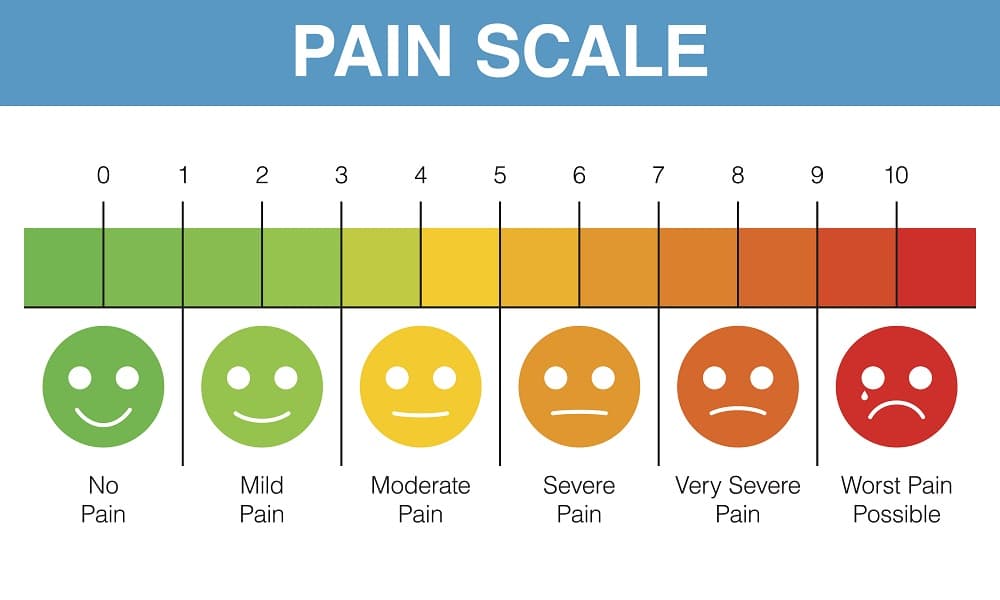 Open larger image: painratescaleg539684888_1333907.jpg
Readers interested in pain assessment can read the Chinese Expert Consensus on the Application of Pain Assessment Scales (2020 Edition) to learn more.
2. Activity Limitations
In this “disability” incident, because the core affected area was the spinal region of the chest and lumbosacral area, any movement requiring bending over or involving force on the thoracic spine, lumbar spine, or lumbosacral junction would be limited. Here is a simple description of what those were:
- Getting out of bed: As described above, I believe everyone already understands this fairly well. Throughout the process of getting out of bed, pain was always present, reaching as high as 7 points and at least around 3–4 points. Now that 24 hours have passed, the obstacle to getting out of bed has been greatly reduced; I can complete the sequence of movements in about 10 seconds, with the highest pain at roughly 2–3 points.
- Standing: At first I could not stand independently and had to have something to support me. If I forced myself to stand alone, the pain was around 6–7 points; with support, it could be slightly relieved to 5–6 points. Now that 24 hours have passed, standing is basically not much of a problem. I can basically no longer feel pain, though occasionally there is still a dull ache of 1–2 points.
- Walking: At first, while keeping my entire trunk as still as possible, I relied completely on lower-limb strength to move slowly. From time to time I needed to bend my knees and use both hands against the roots of my thighs for auxiliary support. The pain level throughout the process stayed around 5 points. Now that 24 hours have passed, walking is basically not a big problem, with only a dull ache of around 1 point.
- Brushing teeth: I could not do it independently, so I failed to brush my teeth that morning. By evening I could brush my teeth, but I could not bend over at all, otherwise there would still be current-like pain.
- Pouring water: Because I was sitting on the sofa and bending over to pour water, I did not pay attention to using the correct posture, causing my waist to bear the force directly. It hurt so badly that I sucked in a breath of cold air: 7 points. Now, after 24 hours, pouring water carefully still cannot avoid bearing weight, so the pain level is around 3 points.
- Sitting and standing from a seat: At first I could not sit or stand independently and had to have support. For example, when sitting at the desk, I had to rely on my upper arms to support myself on the desktop before I could sit down, and getting up was the same. I also could not maintain a sitting position for too long; about 5 minutes was the limit, and the pain stayed between 4–6 points throughout. Now that 24 hours have passed, if I keep my body upright and have a cushion as a support point for my lower back, I can already sit for a long time, but there is still a dull ache of about 1–2 points. Both feet must be fully planted on the ground; if I let one foot droop over the other, the pain intensifies to around 2–3 points.
- Working on a computer: Similar to sitting and standing from a seat. Now, 24 hours later, I can work on a computer for a relatively longer time. This article is currently being written in exactly this state. The pain is consistent with sitting, but I need to keep my finger strikes from being too wide, and both palms need to stay on either side of the trackpad as support, so that the weight of my upper arms does not transfer directly to my trunk.
- Putting on and taking off clothes: Fortunately, the current temperature is still acceptable, and putting on a T-shirt is not too difficult. The more troublesome part is putting on and taking off trousers. Let’s not talk about it; it is all tears. It is going to hurt no matter what, and it just depends how many times it hurts.
- Picking up food delivery: Ordering takeout was already 10 hours after the “disability.” When it arrived, the delivery guy was rather anxious and called out several rounds. Although I responded each time, perhaps the system was urging him because the order was urgent, so he placed the meal on the parcel box at the door. When I opened the door, the Professor held the door handle and tried to bend his knees and squat down to pick it up. The young man noticed this too, and proactively came back to hand the meal to the Professor, saving quite a bit of trouble. Here I thank this delivery guy surnamed Zhou; the tip has already been arranged (👍). Overall, when picking up takeout, one needs to pay particular attention to the posture for receiving it, and there must be support to lean on in order to avoid pain as much as possible. Pain rating: about 2 points.
- Picking up parcels: This was limited to moving the parcel from the outside of the door to the inside. I’ll open it later. I had no energy to fuss with it.
- Crossing one leg over the other: At first I could not do it. I still cannot do it now; there is referred pain, and further observation is needed.
- Going up and down stairs: I did not dare test it. I’ll try going downstairs later. It is now 40 hours later; I have already gone downstairs to the convenience store to buy a few things and had a meal while I was out. Going up and down stairs is basically no problem anymore.
- Peeing: Too painful to look back on. The current situation is that I have finally regained masculine glory and can stand independently to pee again. Somehow, I even felt an inexplicable sense of accomplishment (???).
- Showering: By evening, with the limitations somewhat eased, I could only manage a simple rinse for the time being. One must be extremely cautious and avoid falling.
Understanding Our Spine
Under normal circumstances, when encountering a problem like this, the correct response is definitely to go to the hospital promptly for consultation and treatment.
After all, the Professor has formal training in clinical medicine, so he did not panic too much. I will also share some knowledge about our spine along the way. However, I was rather hesitant about whether to write this part, because for general readers, this content might cause discomfort. I will keep it brief.
1. Anatomy of the Vertebral Column
To make it easier for readers to understand the possible physiological changes in this “disability” incident, let us first look at the physiological anatomy of the vertebral column. The illustration below comes from Frank H. Netter’s textbook Netter’s Atlas of Human Anatomy.
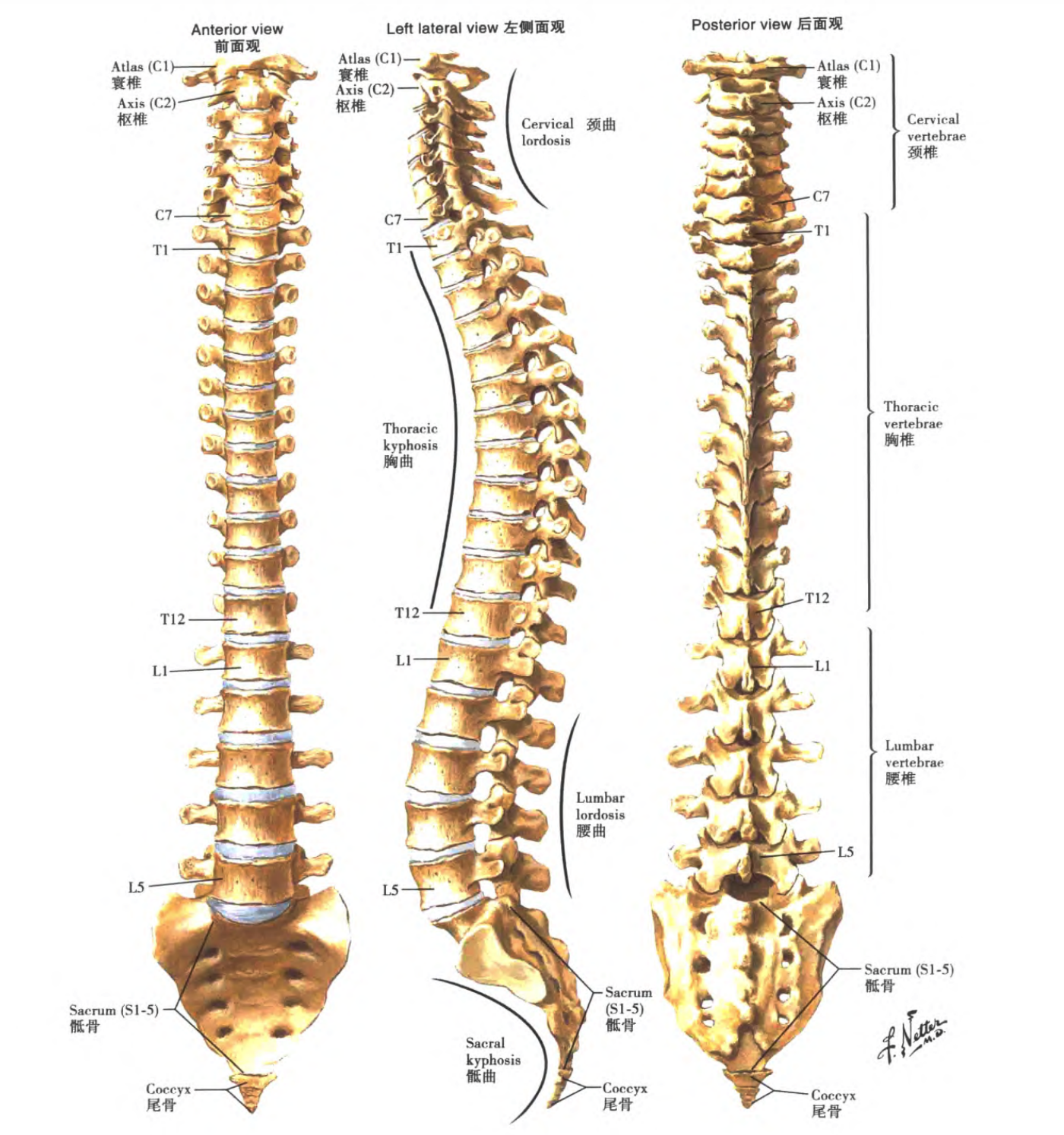 Open larger image: image.png
In the human axial skeleton, the vertebral column, as the main component of the trunk skeleton, contains 24 vertebrae, 1 sacrum, and 1 coccyx, which are connected by bony articulations to form the spine. Its main functions are to support the trunk and protect the spinal cord. Movement of the spine is limited between two adjacent vertebrae, but the range of motion of the entire spine is relatively large, allowing extension, flexion, lateral flexion, rotation, and circumduction.
What the Professor encountered this time was mainly restricted spinal movement in the lumbar curvature between T12~S1. In common terms, it was “throwing out my back”; only, throwing out my back just by sleeping sounds rather unusual. I would rather borrow the term “stiff neck” and call it a “stiff waist.”
The structure of the spine is actually quite complex. The nerves, muscles, blood vessels, ligaments, and intervertebral connection structures within it are all extremely precise and beautiful. The illustrations below come from the textbook Systematic Anatomy.
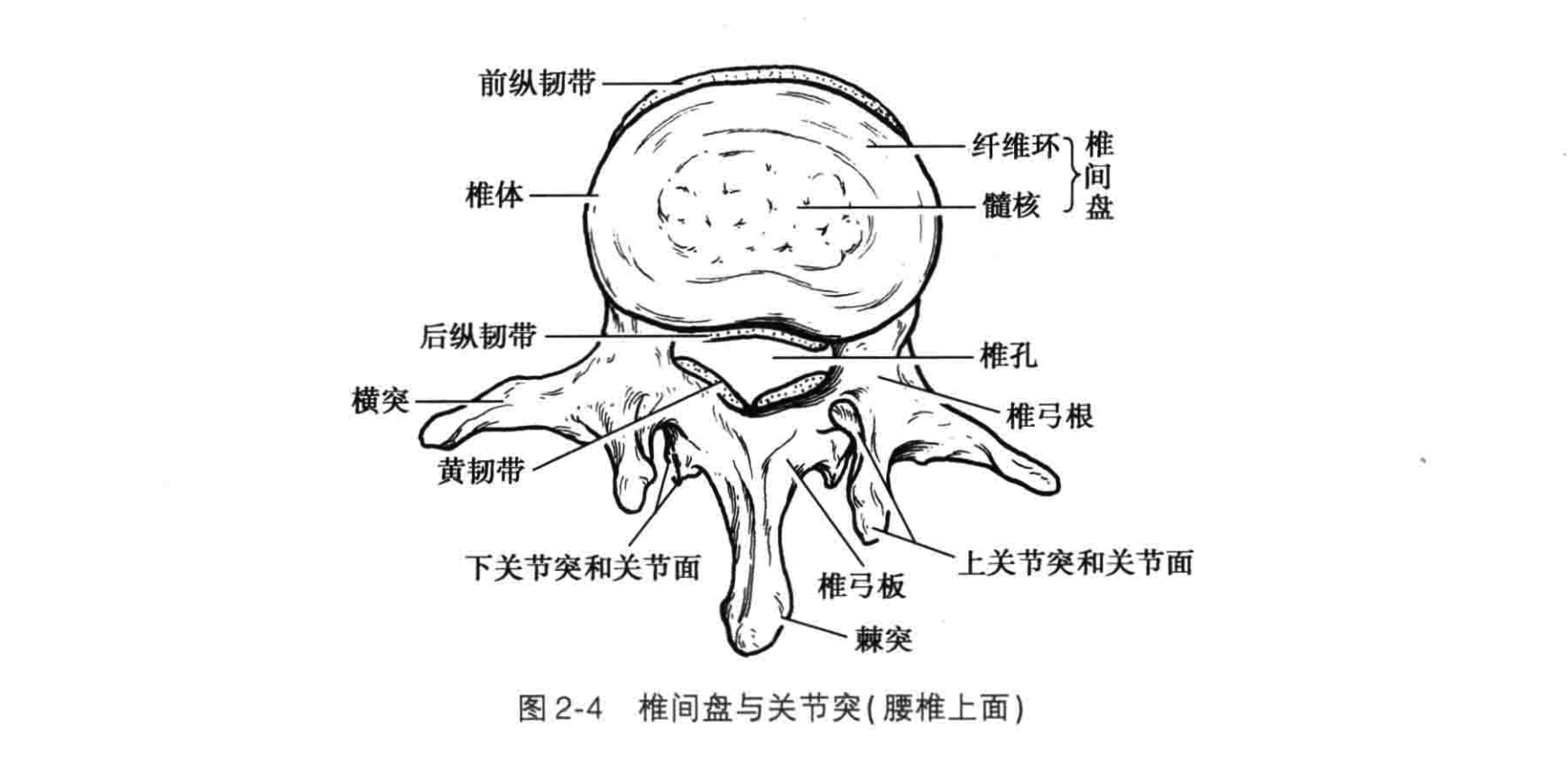 Open larger image: image.png
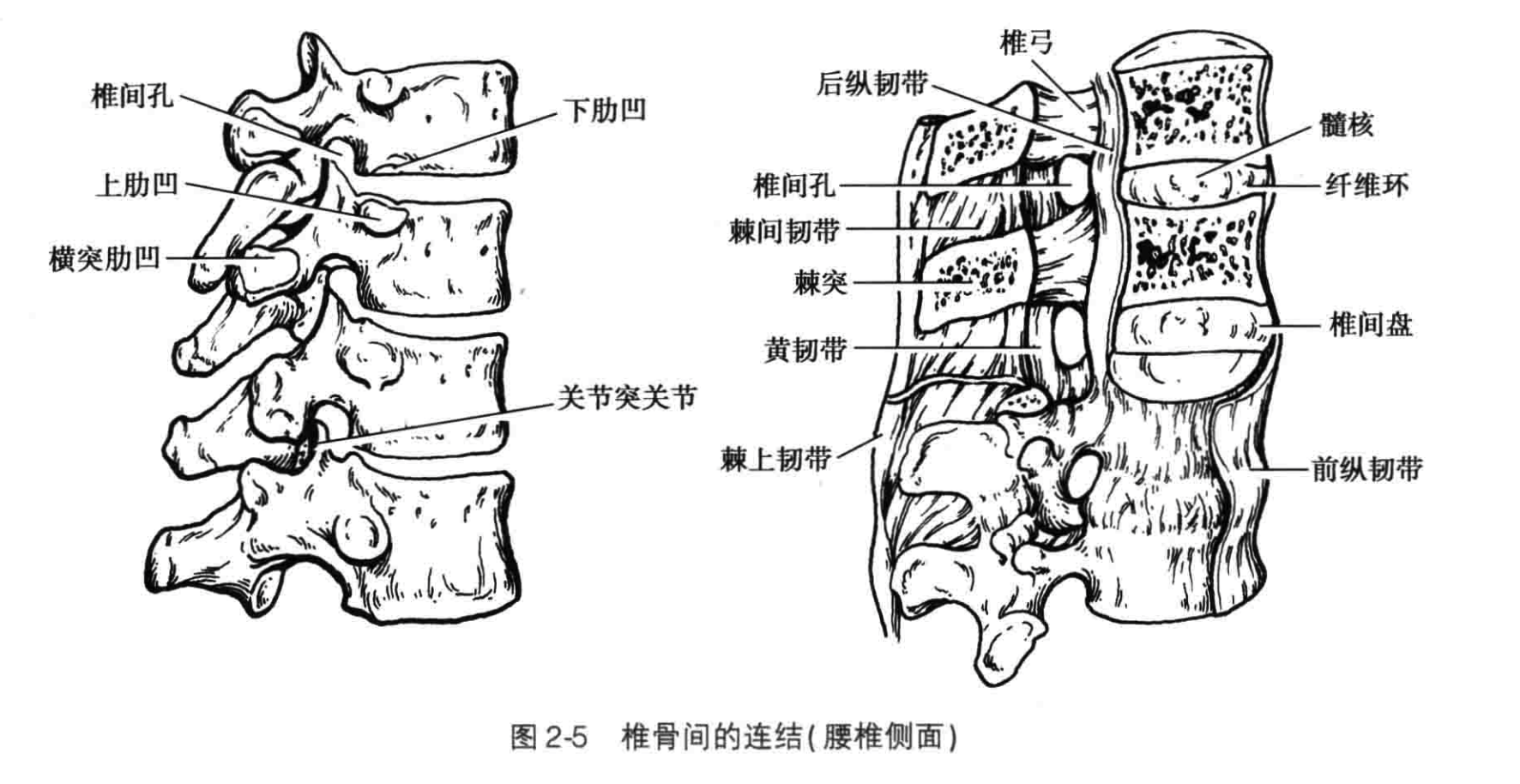 Open larger image: Screenshot 2023-09-16 at 3.16.08 PM.png
2. Muscles, Nerves, and Blood Vessels of the Spine
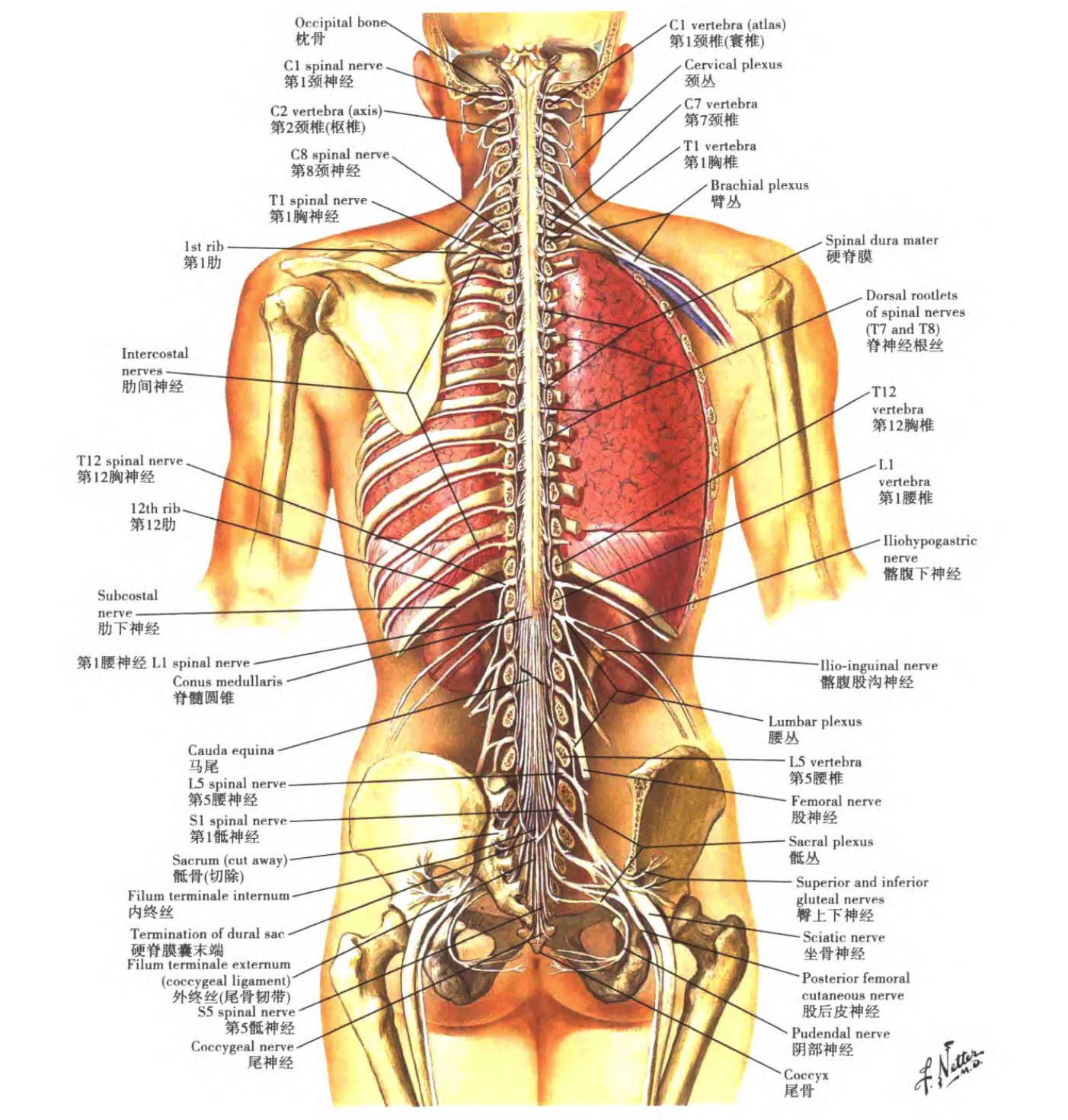
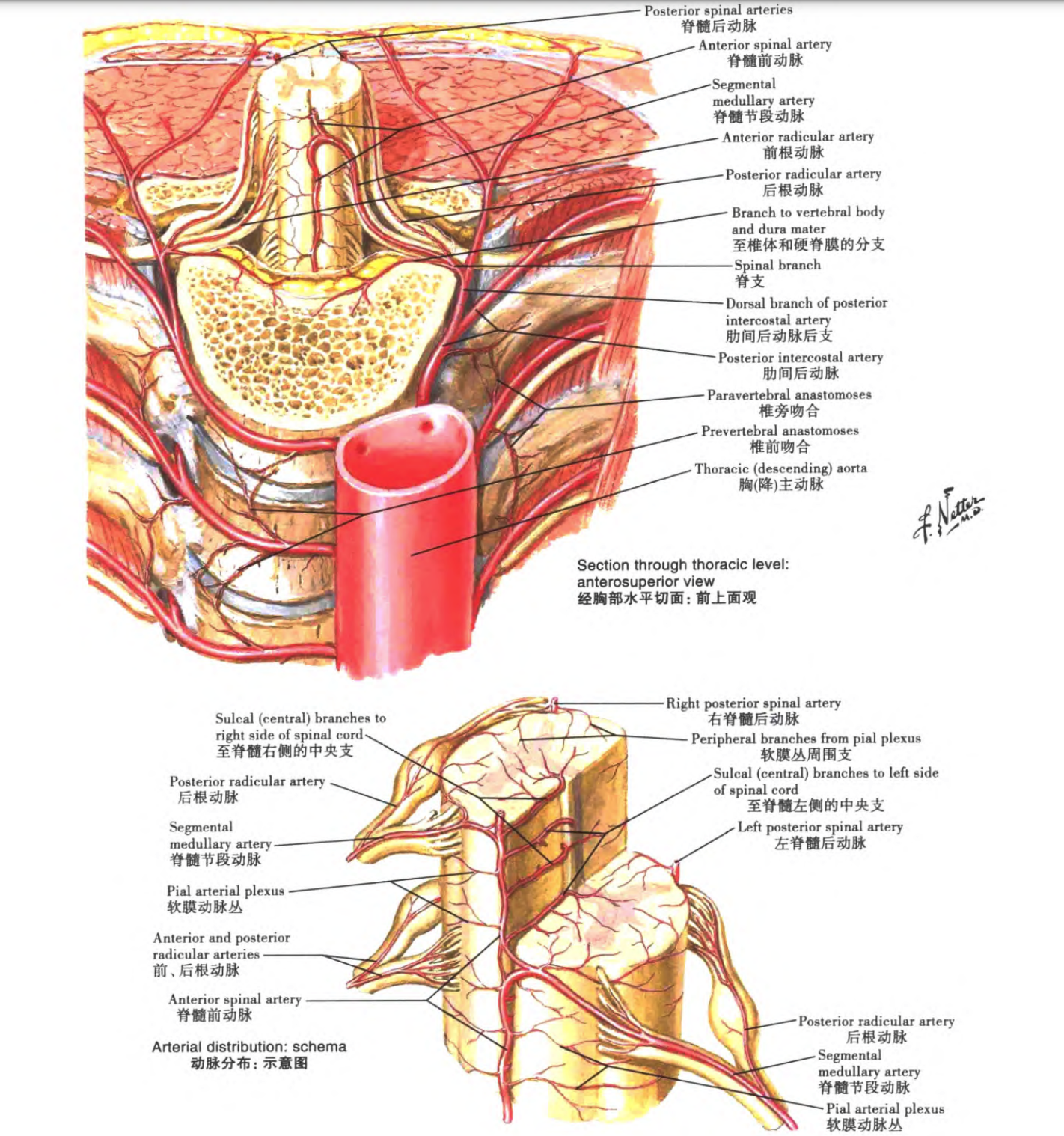
The distribution of the muscles, nerves, and blood vessels of the spine is relatively complex, and atlases make it easier to understand quickly. The illustrations below come from Frank H. Netter’s textbook Netter’s Atlas of Human Anatomy.
Back muscles — superficial layer:
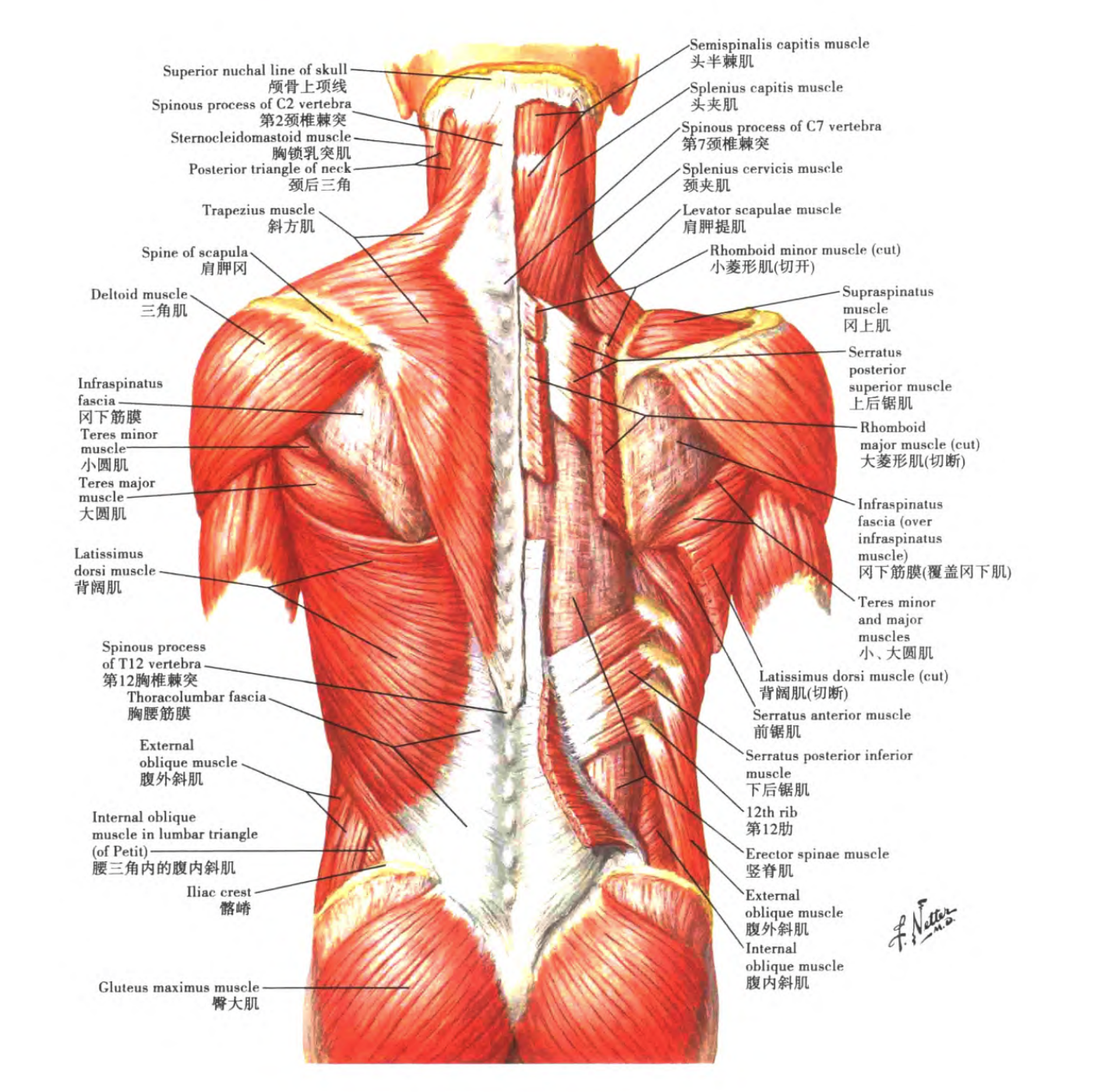
Back muscles — intermediate layer:
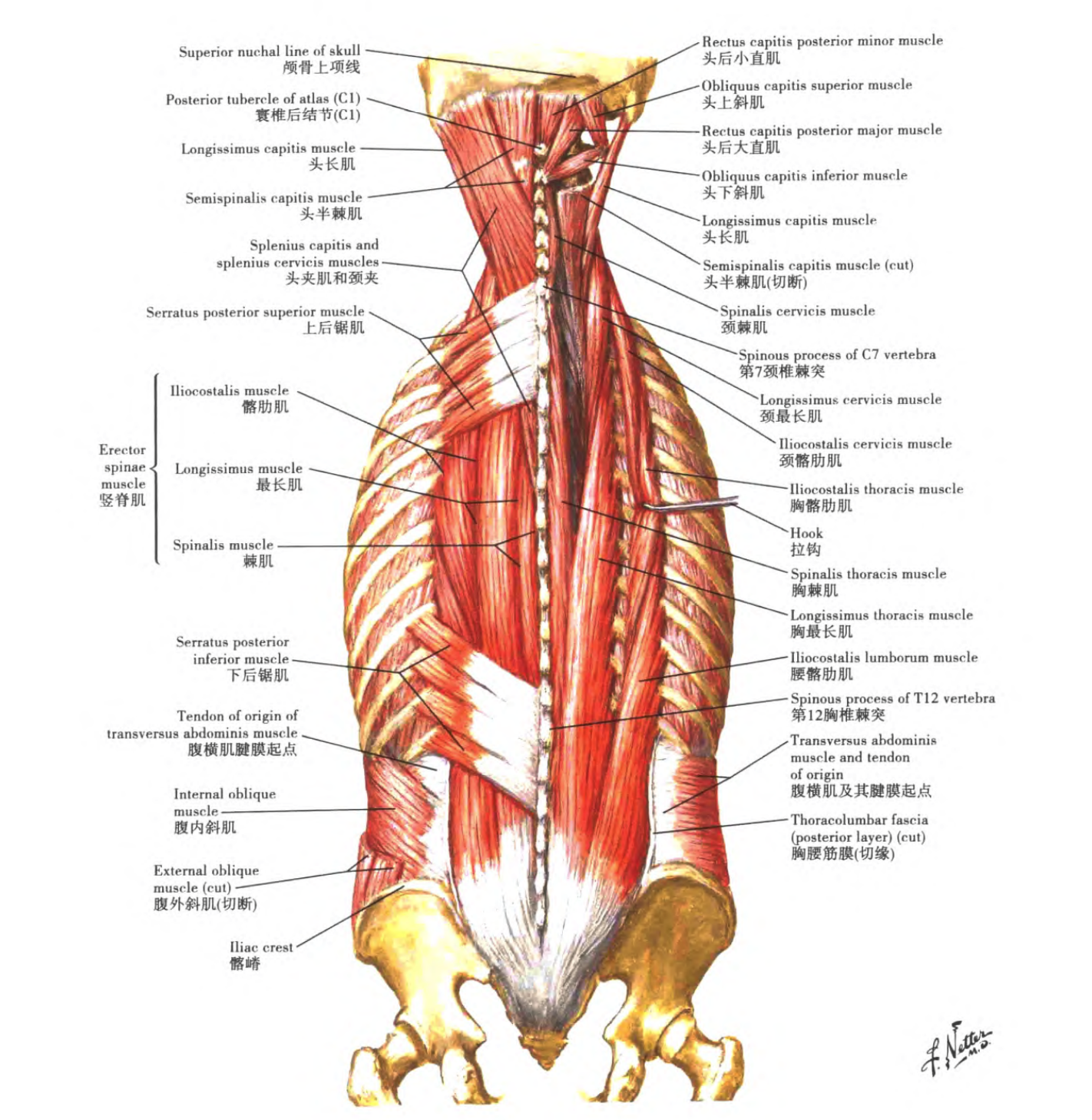
Back muscles — deep layer:
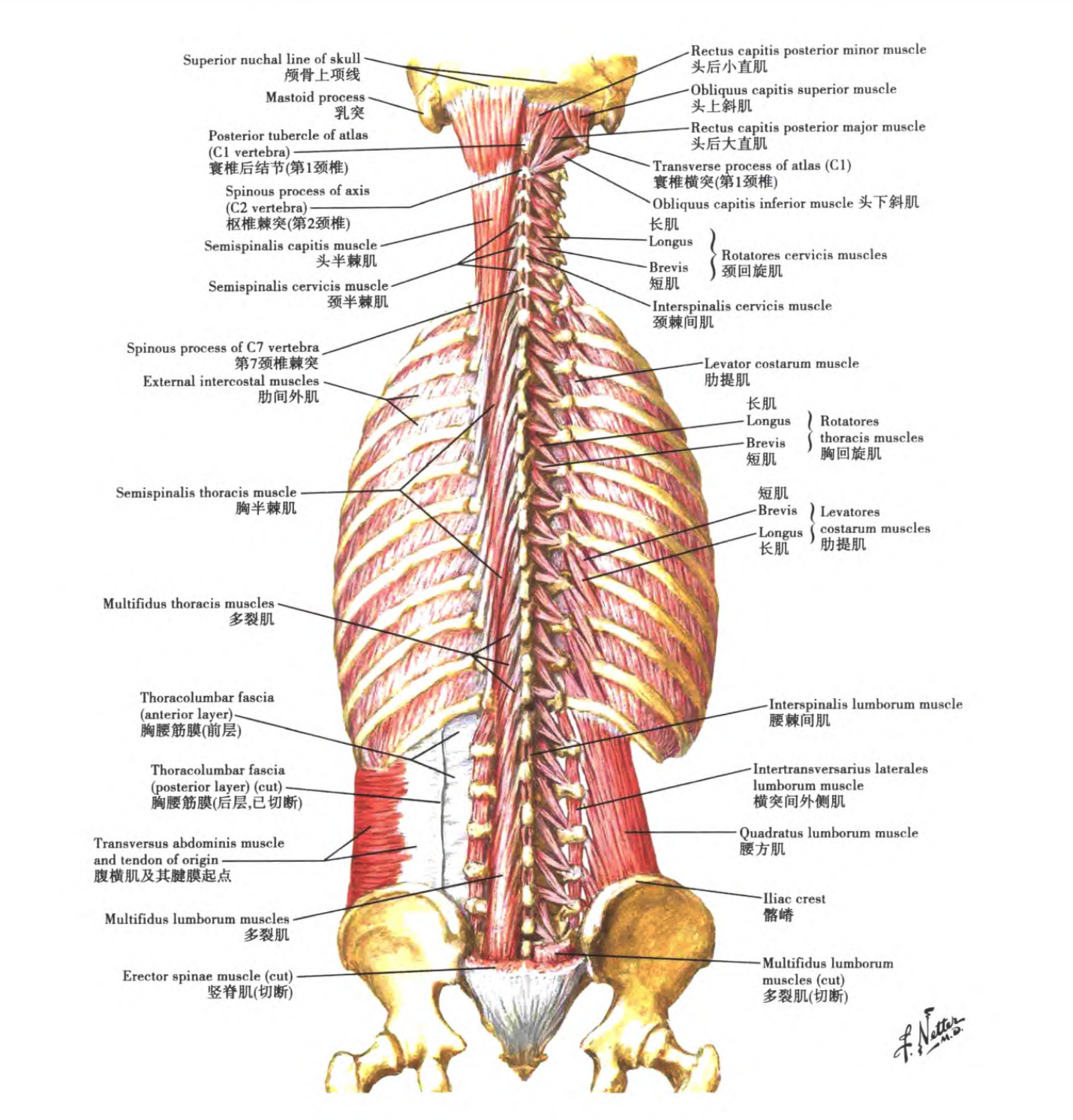
Spinal cord in situ and anterior rami of spinal nerves:
Spinal arteries:
I cannot help but marvel once again at the beauty of the human body!
Simple Symptomatic Care and Rehabilitation
This is not professional treatment advice. It is merely a record of what I did that day to relieve the discomfort:
- Pain relief: I did not use medication for pain relief; I only adjusted my body movements to avoid pain.
- Heat therapy: I placed heat patches on the lumbar spine to speed up local blood circulation and try to reduce the impact of muscle spasm.
- Massage: Massaging the erector spinae muscles on both sides of the lumbar spine with my fingertips and wrists provided some relief.
- Movement: Appropriate activity, such as walking around and shaking my legs while sitting.
- Sleep: Lying flat and having a good long sleep. After resting for one night, I found the symptoms had clearly eased.
How to Avoid “Disability”
- Avoid catching cold and keep warm in daily life: This plain and unadorned advice was something the Professor cared little about when young, but now he treats it as a rule, and it can even be counted as a piece of supreme wisdom. Especially when seasons change and the climate varies greatly, getting chilled or frozen can very easily trigger a series of problems. When I was studying in the past and read Lu Xun writing that Xianglin Sao’s husband died of wind-cold, I found it unbelievable. How could a grown man catch wind-cold just from getting rained on and chilled a little? And after he had mostly recovered, how could a bowl of cold rice cause the wind-cold to recur and even take his life? After all, when I was young, I was often caught in the rain and never saw any problem, and I drank cold beverages without a second thought. Now, having reached middle age, I finally understand that a middle-aged man’s body and health are actually extremely fragile. It is not easy to stay warm day to day and avoid catching cold.
- Maintain a good routine: Staying up late is the enemy of health. A good night’s sleep not only leaves people full of energy, but also makes them emotionally stable.
- Buy a good mattress: A good mattress can protect and support the spine during sleep. Sleep occupies only 1/3 of human time, but in fact a mattress accompanies us longer than most objects do, so buying a good mattress is absolutely necessary. However, if you have a herniated disc, please be more cautious. You may need to consult a doctor before deciding, because to relieve pain in patients with disc herniation, a firm plank bed may be the more appropriate choice; the specifics depend on the individual situation.
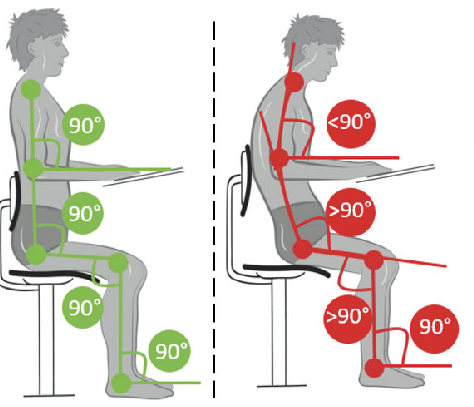
- Fall in love with ergonomics: Ergonomic design should absolutely become one of our basic principles when making purchases. For example, many categories such as furniture and computer accessories now have good ergonomic products available. Oh, and do not forget: lumbar cushions and throw pillows are also very useful!
- Use ergonomic postures: In daily work and life, we should always pay attention to maintaining correct posture, such as sitting posture, walking posture, and posture when carrying objects, and so on.
What Can We Do for “Disabled” People?
I wonder whether everyone has this feeling: in daily life, there seems to be less and less attention paid to people with physical disabilities. During the Professor’s student years, one would often still see policy campaigns for disabled people, or reports about their stories. But somehow, from some point onward, I could no longer notice them.
I am not sure whether this can be called “Unintentional Neglect.” After all, this is an era of information overload. Every day, everyone receives massive amounts of information, and there are countless national and public affairs to care about. Although I may also have such blind spots in social awareness, occasionally something still triggers related associations.
Several times on my way to work, while walking along the road leading to the metro, I saw the tactile paving occupied by casually parked shared bicycles and thought: if someone really followed the tactile paving, would they be harmed?
As ordinary citizens, we often lament that what we can do is always very limited, and what our abilities can change is also extremely limited. The fate of individuals is always connected with the times. As the times sweep each of us along, can we also contribute some tiny bit of strength to make this era friendlier to “disabled” people?
For example, when parking a shared bicycle, avoid pressing it onto tactile paving.
Or, if you are developing a piece of software, could you consider the accessibility needs of people with visual or hearing impairments?
Or further, if your ability and influence are greater, could you also help society give “disabled” people more attention?
A grain of sand in the era may be inconspicuous in the long river of history, yet it can be of great benefit to you and me in the present. As the saying goes, with great power comes great responsibility.
Let us encourage one another.
References
- Haefeli M, Elfering A. Pain assessment. Eur Spine J. 2006 Jan;15 Suppl 1(Suppl 1):S17-24. doi: 10.1007/s00586-005-1044-x. Epub 2005 Dec 1. PMID: 16320034; PMCID: PMC3454549. link
- Evaluation of Pain
- Chinese Expert Consensus on the Application of Pain Assessment Scales (2020 Edition)
- Dulina, Ľuboslav & Gola, Arkadiusz & Gašo, Martin & Horvathova, Blanka & Bigošová, Eleonóra & Barbusova, Miroslava & Plinta, Dariusz & Kyncl, Jiří. (2021). Influence of Various Types of Office Desk Chair for Dynamizing the Operation Assessed by Raster Stereography. Applied Sciences. 11. 4910. 10.3390/app11114910. link